
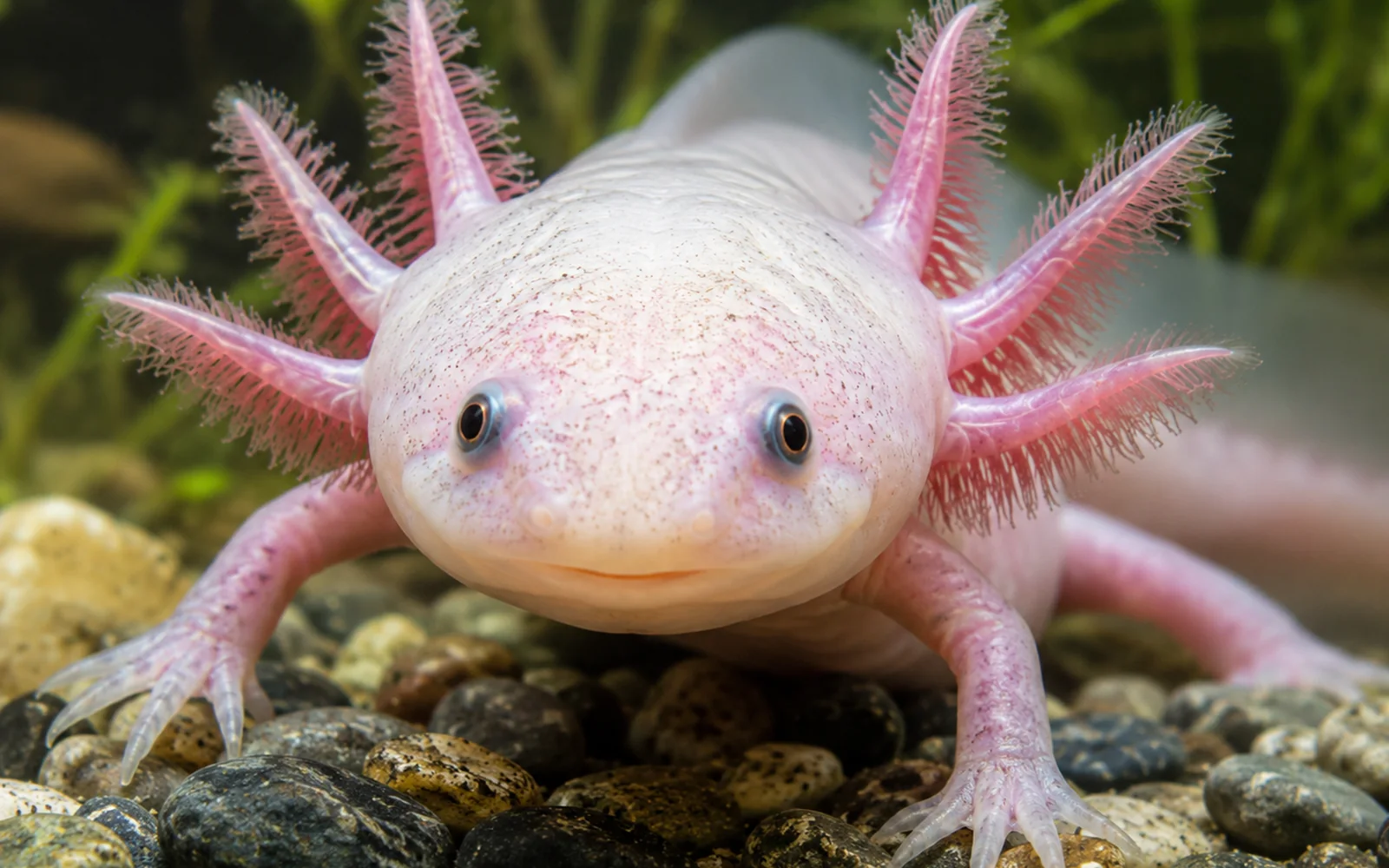
A healthy axolotl setup is a cold, fully cycled, species-only aquarium with gentle filtration, safe floor space, hiding places, regular water testing and appropriate carnivore food. The animal should be added only after ammonia and nitrite stay at 0 ppm.
What an axolotl actually needs
An axolotl is a fully aquatic salamander, not a fish. That matters because its skin and gills are sensitive, it produces a lot of waste for its size, and it depends on cool, clean water every day. Most beginner failures happen when people treat an axolotl like a decorative aquarium animal instead of building the tank around the animal’s biology.
The safest beginner mindset is simple: the aquarium is the life-support system. The filter is not decoration, the water readings are not optional, and temperature is not a small detail. If the tank is too small, too warm, uncycled or full of sharp décor, the axolotl may look calm at first while stress is building.
The five core rules
Beginner shopping list
Before buying the animal, prepare the equipment. A beginner-friendly setup usually includes a wide aquarium, sturdy lid, gentle filter or baffled output, liquid test kit, water conditioner, thermometer, siphon, bucket used only for aquarium water, safe hides, fine sand or bare bottom, and a reliable cooling plan. Buying the axolotl first creates pressure to rush cycling, and rushing cycling is one of the most common causes of illness.
| Item | Why it matters | Beginner note |
|---|---|---|
| Wide tank | More water volume and floor space | More stable than a small cube tank |
| Liquid test kit | Measures ammonia, nitrite, nitrate and pH | Strips are convenient but often less useful for decisions |
| Gentle filtration | Holds beneficial bacteria and removes debris | Strong current can stress axolotls |
| Thermometer | Confirms the real tank temperature | Room temperature can mislead you |
| Hides | Reduce stress and light exposure | Use smooth openings and stable décor |
Weekly care routine
A good routine keeps the tank boring in the best way. Test water at least weekly once the aquarium is stable, and more often after changes, illness, new food, new décor or unusual behavior. Remove waste and uneaten food quickly. Perform partial water changes when nitrate rises, when debris accumulates or when readings indicate a problem. Do not replace all filter media at once because that can remove the bacteria that keep the tank safe.
- Daily: check temperature, behavior, gill position, appetite and obvious waste.
- After feeding: remove leftovers and watch for regurgitation or repeated refusal.
- Weekly: test ammonia, nitrite, nitrate and pH; clean visible debris; inspect hides and equipment.
- Monthly: review whether the animal has outgrown the setup or needs a bigger tank.
Normal behavior vs concerning signs
Axolotls can sit still for long periods, hide during bright hours and move slowly around the bottom. That can be normal. What is not normal is repeated frantic swimming, persistent floating, curled gills combined with other stress signs, shrinking gills, skin peeling, visible fungus, wounds, refusal to eat for an unusual period or any sudden decline after a water-quality change.
The first 30 days after bringing one home
The first month should be quiet and measurable. Do not rearrange the tank constantly, add tank mates, change foods every day or chase social-media tricks. Keep lights dim, keep food simple, and record water readings. A small notebook or phone note with date, temperature, ammonia, nitrite, nitrate, pH, food and behavior is more valuable than guessing from memory.
For deeper setup steps, use the tank setup guide, cycling guide, water parameter guide and feeding guide. This page is the overview; those pages are the operating manuals.
If you are new, read this page first, then the tank setup guide, cycling guide, water guide and feeding guide in that order. Do not try to memorize all 137 FAQ pages. The FAQ pages are there for specific moments: when a reading appears, when a symptom shows up, or when a buying decision comes up. The pillar guides are the system; the FAQ pages are the troubleshooting library.
How to use this site without getting overwhelmed
| Situation | Risky reaction | Safer reaction |
|---|---|---|
| The axolotl refuses one meal | Try many random foods immediately | Check temperature and water, then observe pattern |
| The tank looks cloudy | Replace all filter media | Test water, remove waste and protect bacteria |
| The animal looks bored | Add fish tank mates | Add hides, plants and safer enrichment |
| The room gets warm | Wait until the axolotl acts stressed | Plan cooling before heat arrives |
Common beginner scenarios and the safer choice
The most important upgrade is not always buying more products. Often it is removing risk. Removing gravel is better than buying a decorative cave. Lowering filter current is better than adding more plants. Testing water is better than guessing from the animal’s expression. This is why Axolotl Wise focuses on decisions rather than shopping lists.
Two axolotl tanks can look similar in photos but perform very differently. A weak setup relies on luck: a small tank, untested water, decorations chosen for looks, and a feeding routine based on guesses. A strong setup is built around measurable stability. It has enough water volume, a mature filter, a cooling plan, safe décor and a keeper who can spot changes before they become emergencies.
Care decisions that separate good setups from weak setups
Most of the difference between a thriving axolotl and a struggling one comes down to a handful of early decisions. Choosing a larger, longer tank instead of the smallest one that fits. Sorting out cooling before summer instead of reacting to a heatwave. Cycling fully before buying instead of adding the animal to a fresh tank. Using bare bottom or fine sand instead of gravel. Keeping a liquid test kit and actually logging readings instead of guessing from how the water looks. None of these are advanced, but together they prevent the large majority of beginner emergencies — and they are far easier to get right at the start than to fix later.
Related beginner questions
- Are Axolotls Good Pets for Beginners?
- How Long Do Axolotls Live?
- How Much Does an Axolotl Cost to Keep?
- Juvenile Axolotl Care
- Common Axolotl Beginner Mistakes
Related: learn how to tell if your axolotl is male or female.