
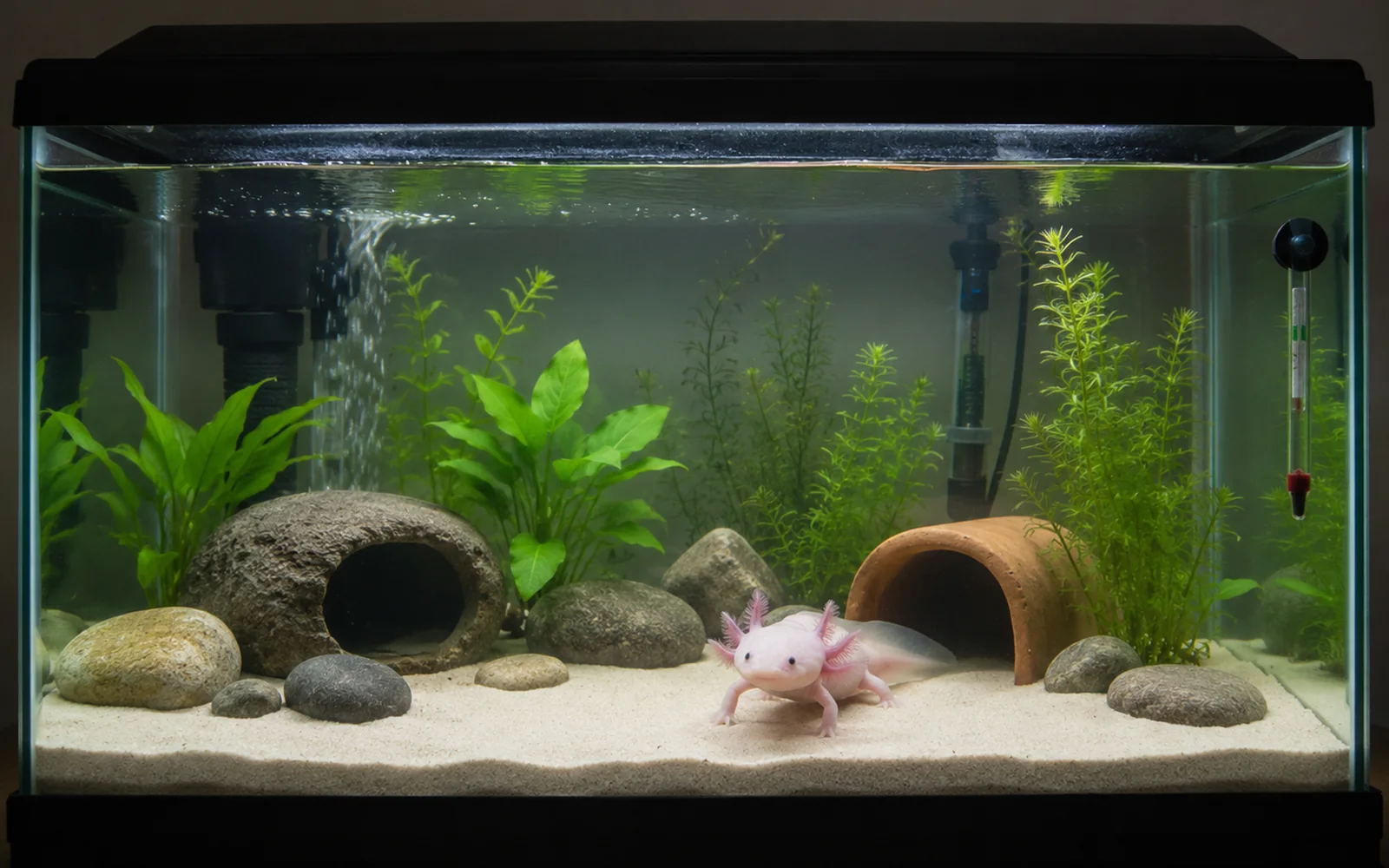
Cycling means growing bacteria that convert toxic ammonia into nitrite and then nitrate. An axolotl should not go into the tank until ammonia and nitrite consistently test 0 ppm after the filter processes a waste source.
What cycling means
A cycled aquarium is not just water that has been sitting for a week. It is a biological system. Beneficial bacteria colonize the filter, surfaces and substrate, then process waste. Axolotls produce a heavy bioload, so the cycle must be strong enough before the animal arrives.
The cycle has three practical stages: ammonia appears, nitrite appears, and nitrate appears. The goal is not to make nitrate disappear completely; the goal is to convert the more dangerous ammonia and nitrite into nitrate, then manage nitrate through water changes.
Fishless cycling steps
- Set up the tank, filter, dechlorinated water, thermometer and hides.
- Add a controlled ammonia source suitable for fishless cycling.
- Test ammonia, nitrite and nitrate regularly with a liquid kit.
- Wait for ammonia to drop as nitrite rises.
- Continue until both ammonia and nitrite can return to 0 ppm after dosing.
- Do a water change to reduce nitrate before adding the axolotl.
Fishless cycling takes patience, but it prevents the animal from being used as the ammonia source. That is the point: the uncomfortable part happens before the axolotl is in the tank.
How to know the tank is ready
A beginner-ready tank should show 0 ppm ammonia and 0 ppm nitrite, with nitrate present but controlled. The filter should be able to process a realistic waste load, not merely show one lucky safe reading. Repeated stable tests are more meaningful than a single test on one day.
Common cycling mistakes
- Adding the axolotl before the cycle is complete.
- Changing all filter media and crashing the bacteria colony.
- Using untreated tap water on biological media.
- Thinking clear water means cycled water.
- Over-cleaning the tank during cycling.
- Forgetting that nitrate still requires water changes.
If you already have an uncycled tank
If the animal is already in unsafe water, do not ignore it while waiting for bacteria. Many keepers use temporary tubbing with daily clean, cool, dechlorinated water while the main tank cycles. This requires care and consistency. If the axolotl is weak, injured, floating badly, covered in fungus or refusing food for a concerning period, seek experienced help rather than improvising.
Read next: Can you put an axolotl in an uncycled tank?
Protect bacteria like they are part of the pet’s life-support system, because they are.
- Replacing all filter media at once.
- Rinsing biological media under untreated tap water.
- Letting filter media dry out.
- Power outages or stopped filters for long periods.
- Sudden heavy waste from overfeeding or dead food hidden in the tank.
- Deep cleaning everything at once.
What can crash or weaken a cycle
Cycling can feel like wasted time because the tank is running without the animal. In reality, it is the cheapest health insurance in axolotl keeping. A rushed setup often leads to emergency tubbing, daily water changes, stress, fungus risk and forum panic. Waiting for the filter to mature is much easier than trying to rescue an animal in toxic water.
Why cycling feels slow but saves time later
Fishless cycling can feel like weeks of doing nothing while you wait for invisible bacteria to grow. It is tempting to skip, but cycling is what lets the tank process waste on its own afterwards. A cycled tank turns the ammonia an axolotl produces into nitrite and then nitrate, which you remove with normal water changes. Without that bacterial filter, you are manually fighting toxic spikes every day and the animal pays for every mistake. The slow weeks at the start buy you a tank that is stable for years, so it is genuinely faster overall to cycle first and add the axolotl once the numbers hold steady.