
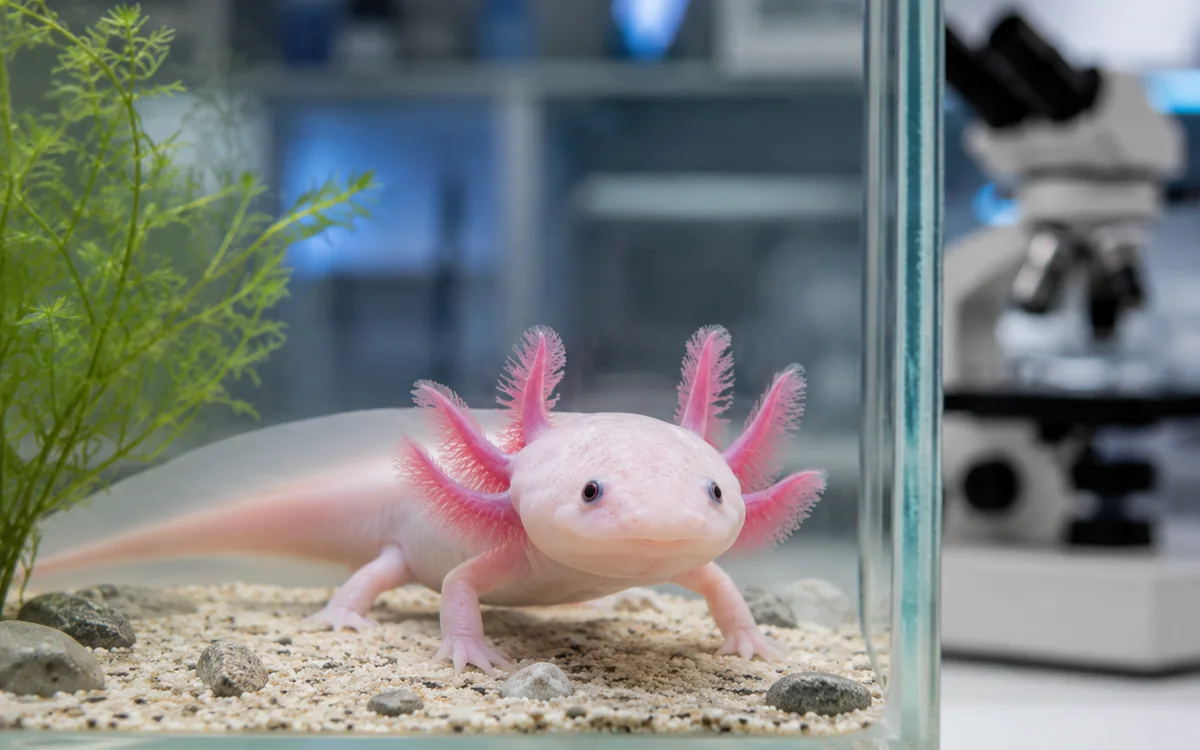
Axolotls can regenerate limbs and several complex tissues, which makes them valuable for biological research. This ability is remarkable, but it does not mean pet injuries are harmless or should be left untreated.
What axolotls can regenerate
Axolotls are known for regenerating limbs, tail tissue and other structures better than most vertebrates. Their healing response is different from typical scarring in many animals. Researchers study this because it may reveal principles of tissue repair, cell signaling and developmental biology.
Why science cares
Regeneration is not just a cute fact. It is a serious field connected to medicine, developmental biology and injury repair. Axolotls give scientists a living model for asking how cells know what to rebuild, how nerves influence regrowth and why some animals scar while others regenerate.
Limits and responsible interpretation
Regeneration has limits. A pet axolotl that loses a limb may regrow tissue, but the injury still causes stress, infection risk and pain-like distress. Dirty water, tank mate bites or sharp décor can turn a survivable injury into a major health problem. The correct lesson is prevention, not complacency.
Regeneration and ethics
Because axolotls are used in research and sold as pets, ethical treatment matters. Captive animals should be housed carefully, handled minimally and protected from stressful conditions. Conservation also matters because the animal’s scientific fame should not distract from the fragile status of wild populations.
The science shows how extraordinary the animal is. For keepers, that should create more responsibility, not less. Avoid tank mates that bite, avoid décor that traps limbs, keep water stable and seek help for wounds. Good care supports the biology; it does not exploit it.
What pet owners should take from the science
The fact that axolotls can regenerate can mislead beginners into treating injuries casually. That is the wrong lesson. Regrowth takes energy and clean conditions, and wounds can become infected. The correct husbandry response is to prevent bites, scrapes and poor water in the first place.
Regeneration is not a care strategy
Axolotls can regrow limbs, parts of the tail and even some internal tissue, and that ability is real and remarkable. It is also not a reason to be relaxed about injury. Regrowth takes energy and clean water, and a wound can become infected with fungus long before it heals, especially in poor conditions. An injured axolotl is a sick axolotl until it recovers. The right response to a lost toe or limb is pristine water, removal of whatever caused the injury, and a vet or experienced rescue if there is bleeding, swelling or fungus — not waiting and assuming it will simply grow back.