
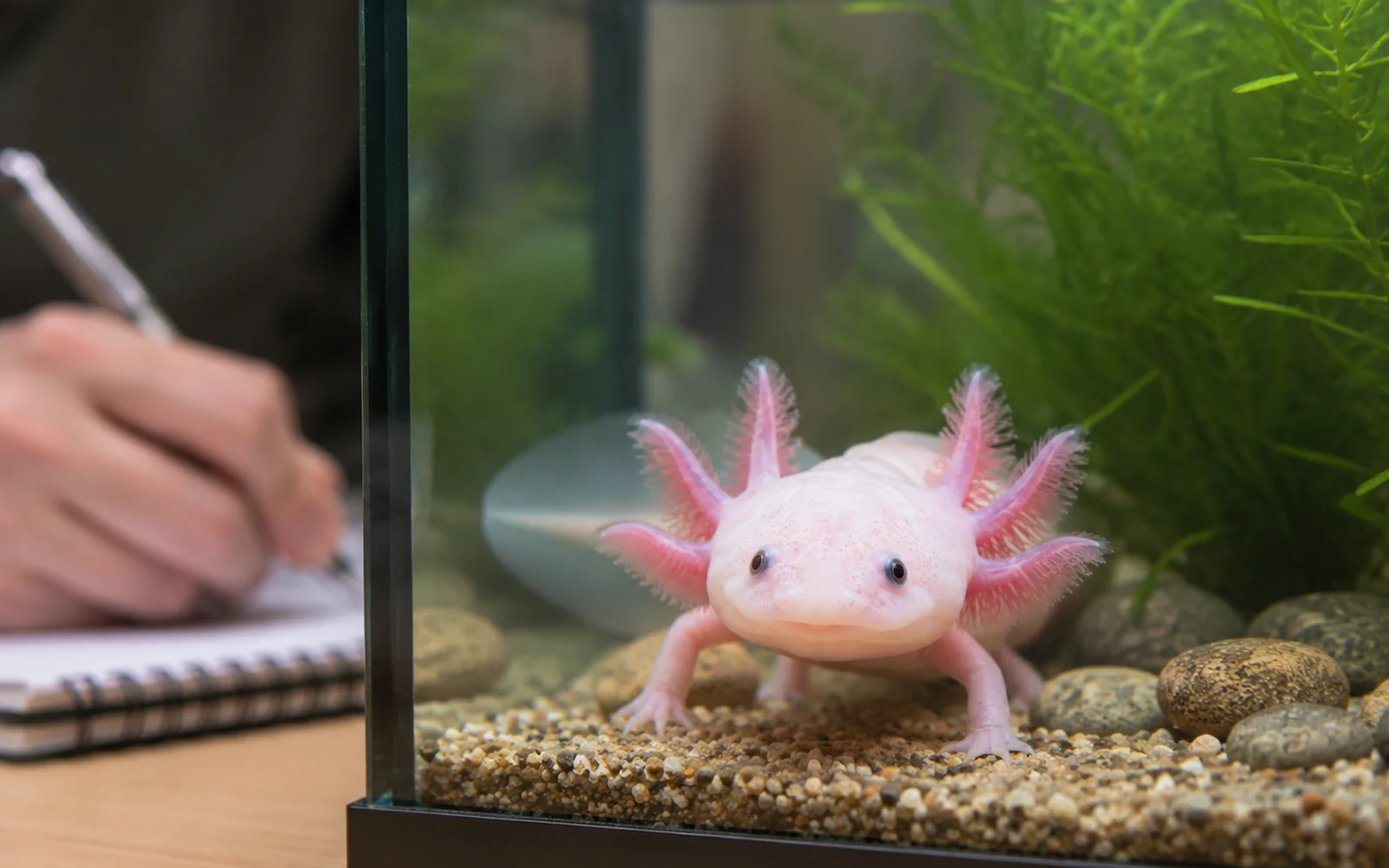
Most axolotl health problems start with water, temperature, injury, stress or infection. Test the water first, correct unsafe conditions, and contact an exotic-animal veterinarian for wounds, fungus, severe floating, repeated refusal to eat or rapid decline.
First check water
When an axolotl looks unwell, the first practical step is not guessing the disease. Test ammonia, nitrite, nitrate, pH and temperature. Poor water can cause stress, gill damage, skin irritation, appetite loss and behavior changes. Correcting water quality is often the foundation of any recovery plan.
Do not assume a tank is safe because it looks clear. Use numbers. If ammonia or nitrite is present, treat the situation seriously and consider temporary clean-water housing while the main tank is corrected.
Normal vs warning signs
| Observation | May be normal | More concerning when |
|---|---|---|
| Hiding | Resting during bright hours | Constant hiding with refusal to eat or stress signs |
| Floating | Brief buoyancy after eating or gulping air | Persistent, unable to sink, bloating or distress |
| Gill movement | Gentle flicking | Shrinking, pale, damaged or curled with other symptoms |
| Low appetite | Occasional adult fasting | Repeated refusal, weight loss or poor readings |
Common health problems beginners notice
Fungus often looks like white cottony growth, especially around gills or wounds. Skin peeling can appear with irritation, poor water or injury. Frantic swimming can indicate stress, sudden changes, strong flow or unsafe water. Curled tail tip is often treated as a stress signal, especially when combined with other problems.
Health pages online can help you describe what you see, but they cannot examine the animal. Use them to decide when to escalate, not to delay help.
Emergency clean-water setup
Many keepers use temporary tubbing during water emergencies. A tub must contain cool, dechlorinated water and be changed frequently. It should be secure, clean and calm. Tubbing is not magic treatment; it is a way to separate the animal from unsafe tank water while you fix the real cause.
Prevention beats rescue
- Keep ammonia and nitrite at 0 ppm.
- Avoid fish, gravel and sharp décor.
- Keep water cool and stable.
- Quarantine new animals or live foods when appropriate.
- Do not medicate randomly.
- Record readings and symptoms before asking for help.
When asking a vet, rescue or experienced keeper for help, provide the tank size, temperature, ammonia, nitrite, nitrate, pH, food, last meal, photos, tank mates, substrate, filter type and recent changes. This saves time and prevents generic advice. “My axolotl is acting weird” is hard to diagnose; “ammonia is 0.25 ppm after a filter cleaning and the gills are curled” is much more useful.
What to record before asking for help
- Test water: ammonia, nitrite, nitrate, pH and temperature.
- Check environment: flow, substrate, décor, tank mates and heat.
- Check body: gills, skin, limbs, posture, floating, appetite and waste.
- Stabilize: clean, cool, dechlorinated water and reduced stress.
- Escalate: vet or rescue help for wounds, fungus, severe buoyancy, swelling, rapid decline or repeated refusal to eat.
A simple triage order
When something looks wrong, it helps to check things in a fixed order rather than panicking. First, test the water: ammonia, nitrite, nitrate, pH and temperature, because poor water is behind a large share of axolotl problems. Second, look at the environment: flow that is too strong, a tank that is too warm, too small or too bright. Third, look at the animal itself for wounds, fungus, bloating or appetite loss. Fixing water and environment resolves many issues on its own, and it gives any vet a much clearer starting point. Contact an exotic-animal vet or experienced rescue for bleeding, spreading fungus, severe floating or a rapid decline.
Related health questions
- Why Is My Axolotl Floating?
- Why Is My Axolotl Not Eating?
- What Does Axolotl Fungus Look Like?
- Why Are My Axolotl’s Gills Curled?
- Axolotl Vet Care
Related: learn how to tell impaction from constipation.
Related: why an axolotl’s gills curl forward.