
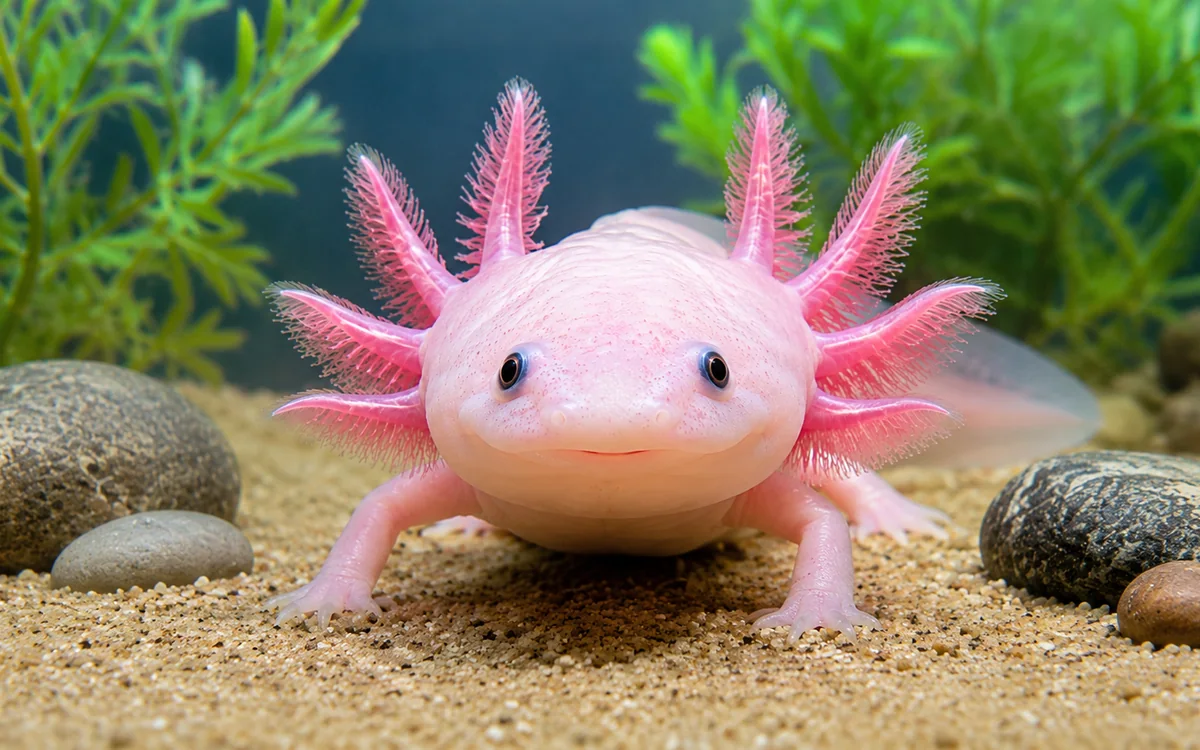
Axolotls are fully aquatic salamanders from the Xochimilco area of Mexico. They are famous for neoteny, external gills and regeneration, but they are also critically threatened in the wild.
What an axolotl is
An axolotl is an amphibian, specifically a salamander, that normally stays aquatic throughout its life. Unlike many salamanders, it does not usually transform into a land-dwelling adult form. This retained larval-like adult condition is called neoteny, and it is one reason axolotls look so distinctive.
Features that make them recognizable
- Feathery external gills on both sides of the head.
- A broad, rounded face with a slight “smile”.
- Four small limbs and a long tail used for swimming.
- Aquatic lifestyle rather than a land enclosure.
- Regeneration abilities that interest scientists.
Common pet misconceptions
Axolotls are often shown as cute and easy, but they are not low-effort pets. They do not need a tropical heater, do not need land, and should not be placed with random fish. They need cold water, a cycle, safe substrate and consistent maintenance.
| Myth | Reality |
|---|---|
| They are fish | They are amphibians. |
| They need a land area | Normal axolotls are fully aquatic. |
| They are easy bowl pets | They need a filtered, cycled aquarium. |
| They can live with most fish | Tank mates are usually risky. |
Science and conservation
Axolotls are important in regeneration research because they can regrow complex tissues. At the same time, wild axolotls face habitat loss, pollution, invasive species and pressure around their remaining canal habitat. Pet axolotls are generally captive-bred and should never be released into the wild.
Every interesting fact connects to care. External gills mean water quality and current matter. Aquatic life means they do not need land. Cold habitat preference means a tropical setup is wrong. Regeneration means they are scientifically fascinating, not that injuries are acceptable. Conservation status means captive ownership should be responsible and never involve release.
From cute fact to care decision
Axolotls are visually memorable: external gills, a soft face, a permanent aquatic lifestyle and a cartoon-like expression. That made them popular online, in games and in social media. Popularity helps people discover the species, but it also creates impulse buying. A fact page should turn curiosity into responsible learning.
Why axolotls became internet-famous
Axolotls went from obscure lab animal to internet favourite for several reasons at once. The permanent “smile”, feathery external gills and bright morphs photograph and animate well, which made them a natural fit for memes, games and short video. Their ability to regrow limbs gives them a genuine science story that is easy to share. And because they stay in their aquatic juvenile form for life, they keep the soft, cartoonish look people respond to. The downside of that popularity is a wave of impulse buying by keepers who underestimate how demanding cold, cycled, well-tested water really is — which is exactly why good care information matters.
Related fact questions
- What Is an Axolotl?
- Are Axolotls Fish?
- Do Axolotls Need Land?
- Can Axolotls Regrow Limbs?
- Are Axolotls Endangered?
Related: learn how long axolotls live (and what decides it).