
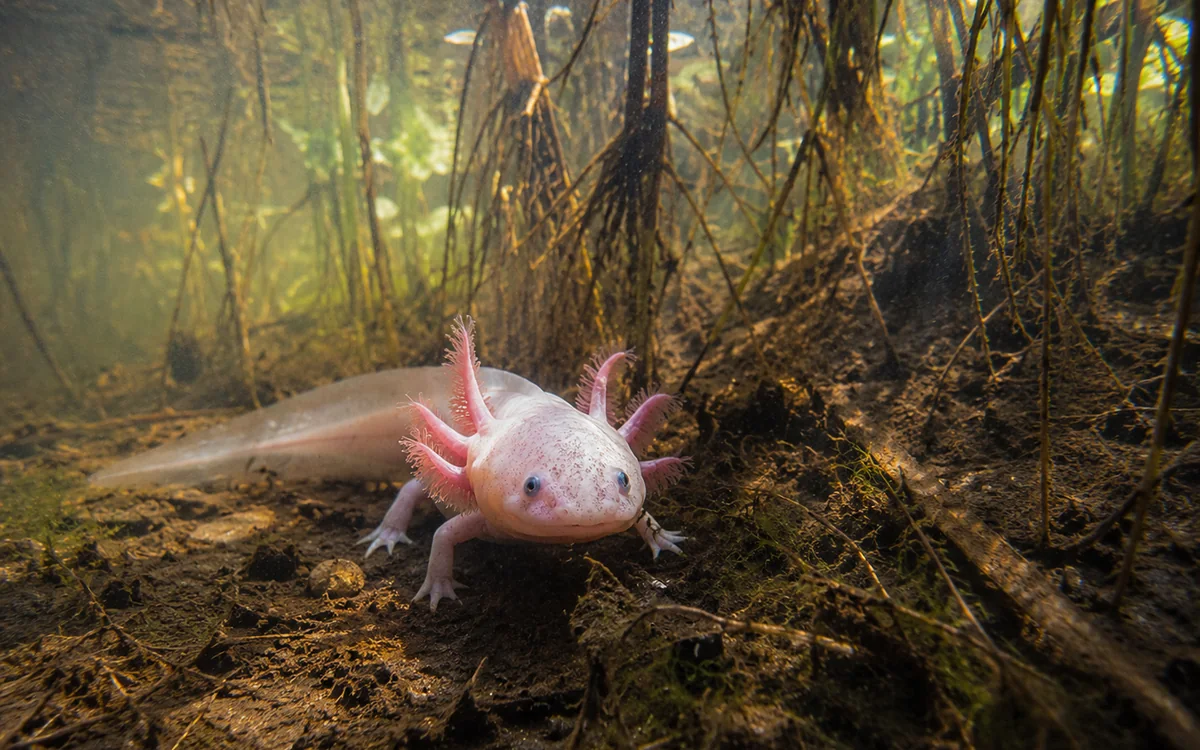
Wild axolotls are tied to the Xochimilco canal system in Mexico and are severely threatened by habitat change, pollution, invasive species and ecological pressure. Pet axolotls should never be released.
Where wild axolotls live
Axolotls are associated with the freshwater canal and wetland environment around Xochimilco. The wild animal is not simply a generic aquarium species; it has a very specific natural context. That context is part of why conservation is difficult and important.
Why they are disappearing
Wild populations face multiple pressures at once: habitat loss and fragmentation, water-quality problems, urban pressure, invasive fish and ecological disruption. A captive pet axolotl may be common online, while the wild animal remains in serious trouble. Those two facts can both be true.
Pet trade ethics
Most pet axolotls are captive-bred, which is better than removing animals from the wild. But responsible ownership still matters. Owners should not release pets into ponds, canals or local waterways. Released captive animals can die, spread disease, disrupt ecosystems or mix with populations in harmful ways.
- Buy only from responsible captive breeders or rescues.
- Do not buy from sellers who cannot explain care, age or health history.
- Never release a pet axolotl.
- Do not share care content that encourages tiny tanks or novelty setups.
- Support conservation education rather than impulse buying.
How keepers can help
The best everyday contribution from a keeper is responsible demand. Reward sellers who prioritize health and care education. Share accurate setup information. Push back against viral content that treats axolotls as disposable cute objects. If you donate, choose credible conservation or habitat-focused organizations and verify their work.
A good axolotl website can reduce impulse buying, correct poor care advice and explain why release is dangerous. That may not be habitat restoration, but it improves the culture around the animal. Better-informed owners create better demand, and better demand rewards responsible breeders and rescues.
How a niche site can help
One of the confusing things about axolotls is that they can be common in the pet trade while still being severely threatened in their native habitat. Captive-bred availability does not repair wild canals, remove invasive species or restore water quality. That is why conservation messaging belongs beside pet care.
Captive popularity does not equal wild security
It is easy to assume axolotls are safe because shops and breeders seem to have plenty of them. In reality the wild population in the canals around Mexico City is critically endangered, while almost every pet axolotl is captive-bred from a small founder group. Those two facts sit side by side: the species can be common in tanks and still be disappearing in the wild. Captive animals are not a backup for the wild population either, because they are genetically narrow and adapted to aquarium life. Keeping a pet axolotl responsibly and supporting habitat protection are separate things, and both matter.